
Case Study: Car List Information API
Tech Stack: Laravel, PHP, MySQL, HTML, Tailwind CSS & Alpine JS
Introduction
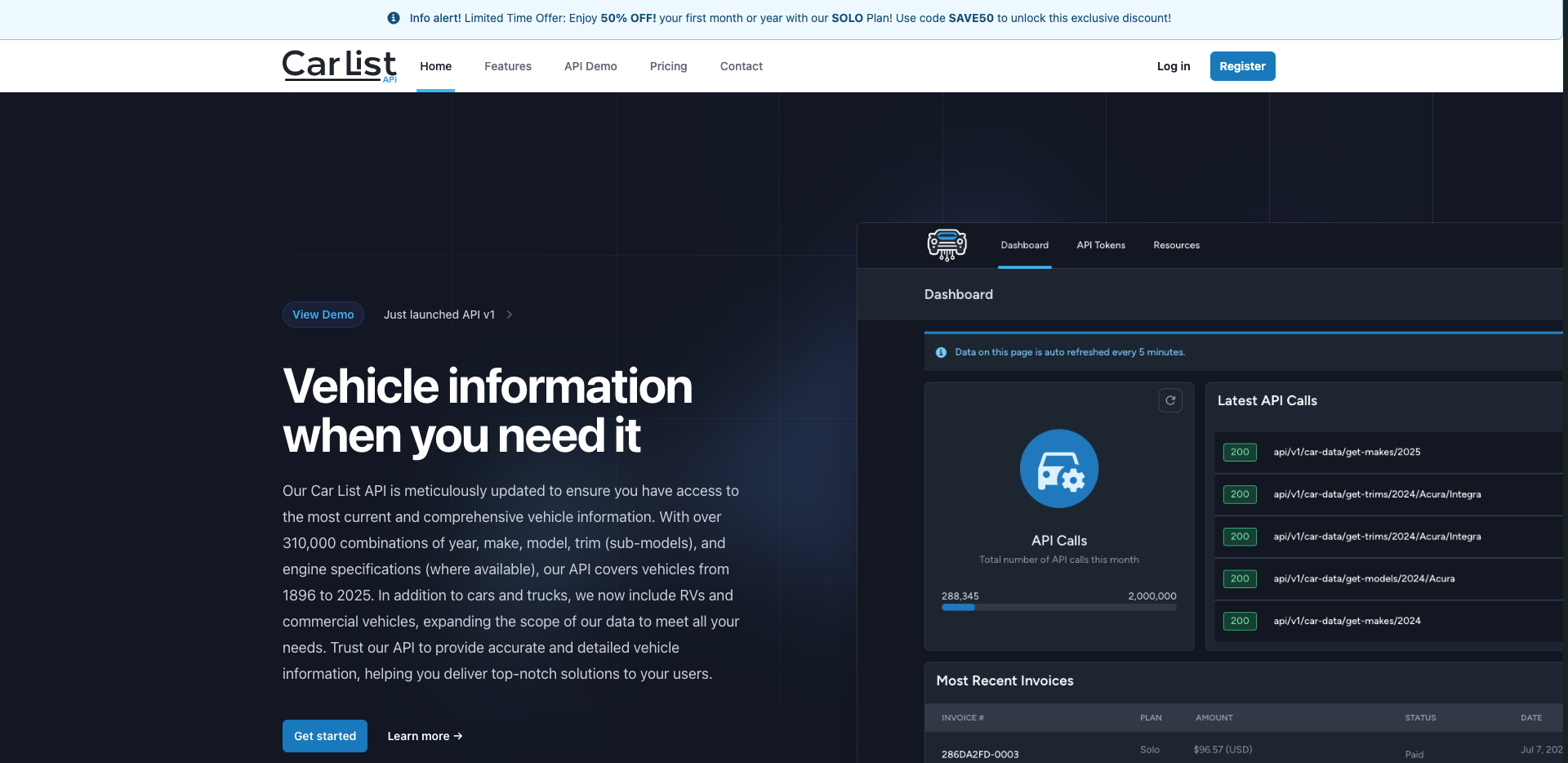
When I first set out to create CarList API, my goal was simple yet ambitious: deliver a fast, reliable, and developer-friendly service that exposes comprehensive vehicle data—years, makes, models, trims, engine specs and more — for cars, trucks, RVs, commercial vehicles, and powersports. Having spent years integrating inconsistent third-party data and wrestling with manual updates, I knew there had to be a better way.
- Universal Coverage: Support vehicles from the horseless-carriage era (late 1800s) through the latest 2026 models.
- Ease of Use: Minimal onboarding friction, clear documentation, and code samples in popular languages.
- Performance & Reliability: Sub-100 ms median response times, 99.9% uptime.
- Scalable Pricing: From hobbyists to enterprise-scale fleets.
- Automated Updates: Quarterly (at minimum) data refreshes, with a process that could be extended to monthly as needed.
-
Fragmented Data SourcesAggregating data from OEM publications, powersports manufacturers, and government registries meant wrestling with different formats, data gaps, and occasional inconsistencies.
-
Versioning & Backward CompatibilityAs model years roll over, clients need both the very latest information and historical lookups—often for regulatory or valuation backtesting.
-
Developer ExperienceMany vehicle data services expose dozens of deeply nested JSON objects or XML payloads—hard to parse and integrate quickly.
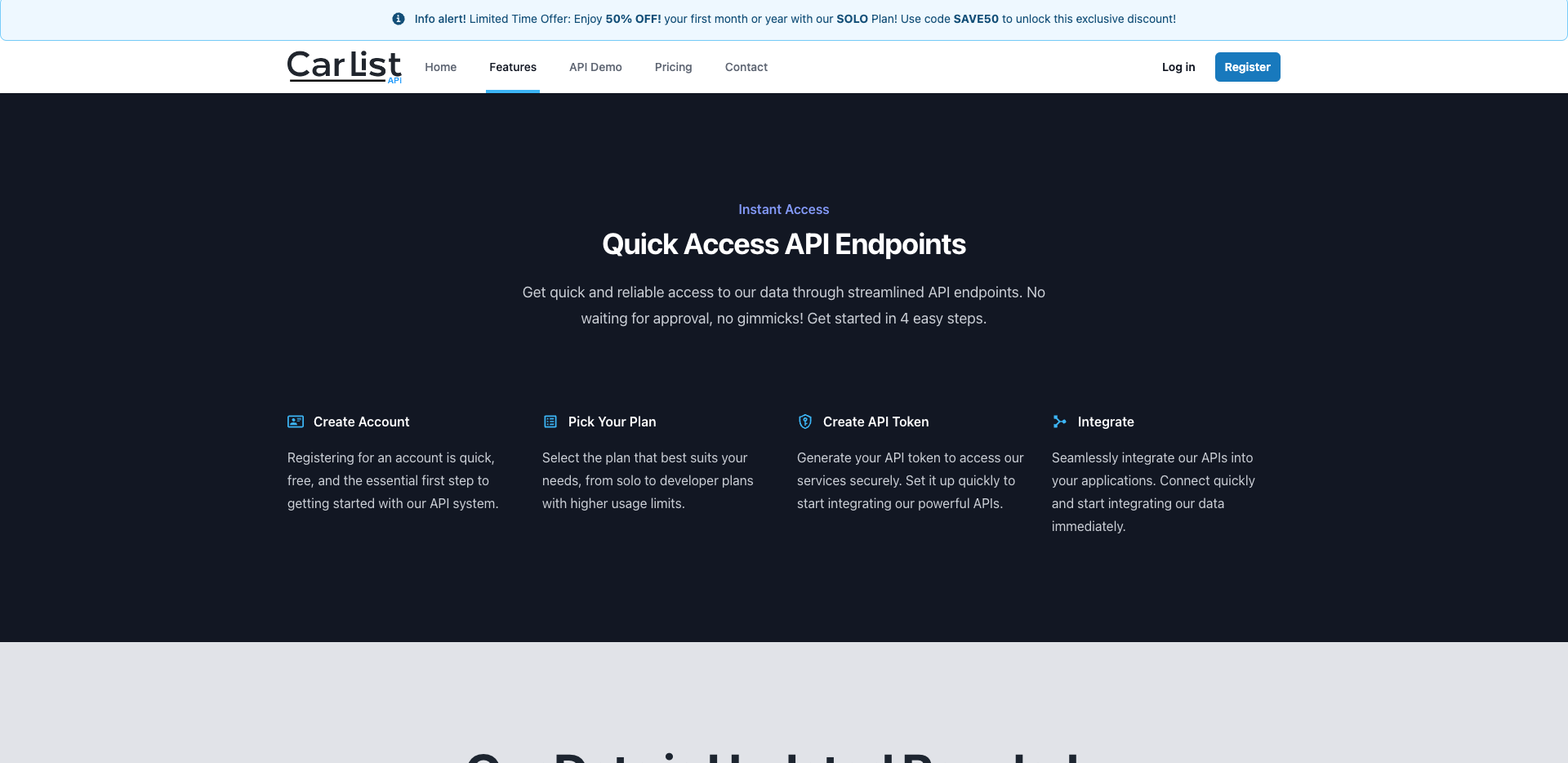
CarListAPI was created to solve these issues by providing an easy-to-use API that grants access to a wealth of automotive data, including vehicle specifications and features information. The platform offers:
- Comprehensive Vehicle Data: CarListAPI provides access to a large database of vehicle information, including model specifications, technical details, and features data.
- Real-Time Updates: The API ensures data is updated in real-time, helping businesses stay ahead with the latest information on car models..
- Ease of Integration: The API is designed for developers, with clear documentation and robust support to simplify integration into websites, apps, and other systems.
- Scalability: Whether a small startup or a large marketplace, CarListAPI can scale to handle varying amounts of data requests, making it adaptable to different business needs.
Development Process
Challenges and Solutions
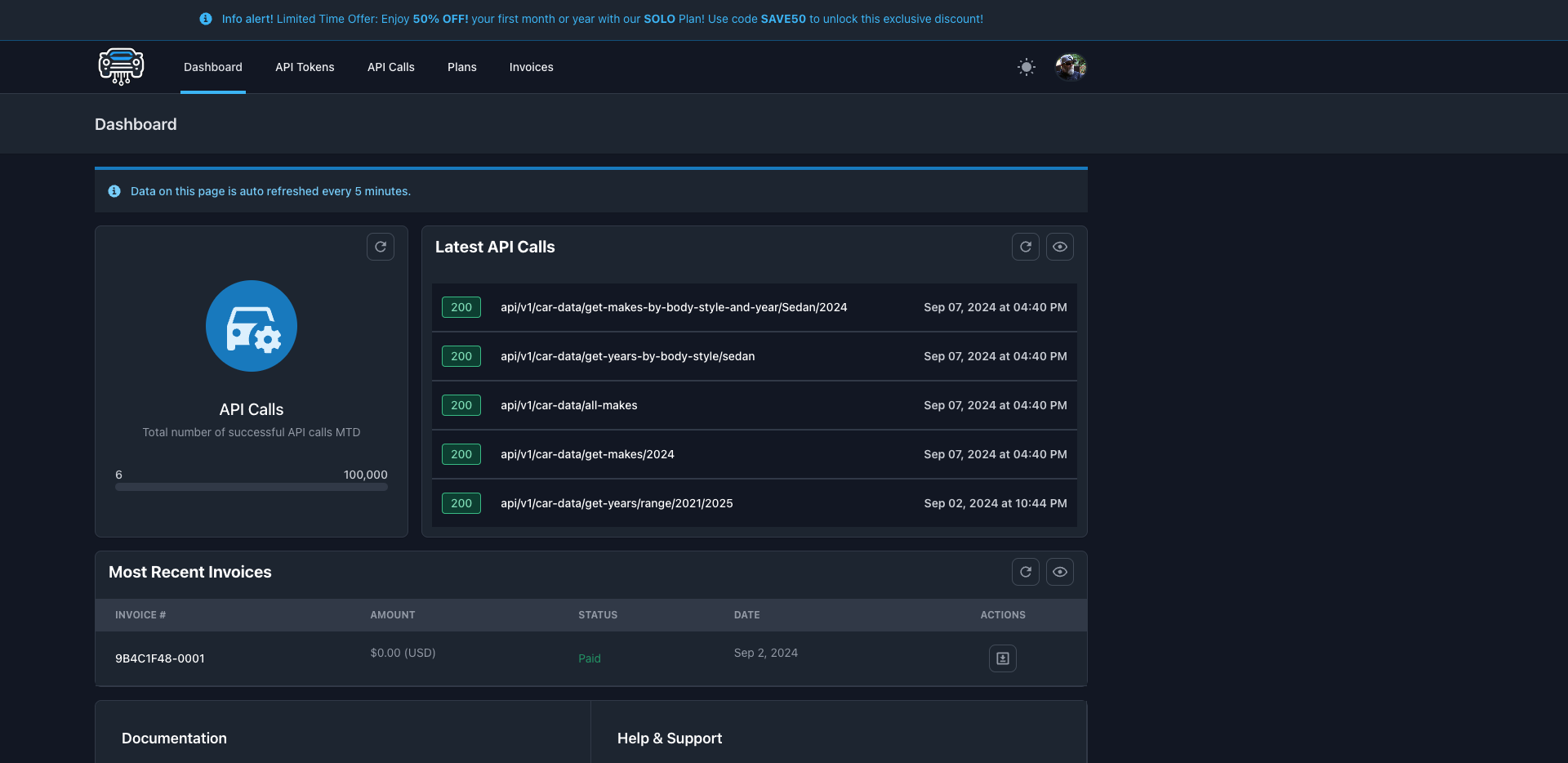
- Real-time Data Interaction: Providing users with the ability to interact with vehicle data in real-time posed a challenge. Livewire addressed this by enabling dynamic updates and interactions within the Laravel framework, improving the user experience significantly.
- Data Accuracy and Completeness: Ensuring the database contained up-to-date and comprehensive vehicle information required continuous updates. The team implemented a regular data update process, sourcing information from reliable automotive data providers.
- Scalability: Anticipating high demand, the system's scalability was a concern. The use of Laravel's queue system and optimizing database queries ensured that the API could handle a growing number of requests efficiently.
Results and Impact
- Easy Integration: The API's comprehensive documentation and user-friendly interface facilitated seamless integration into various applications.
- Accurate Vehicle Data: Access to detailed and accurate vehicle information enabled businesses to enhance their services, from vehicle valuation to insurance quote generation.
- Improved User Engagement: The dynamic user interface, powered by Livewire, provided an enhanced user experience, encouraging more interactions with the API dashboard.